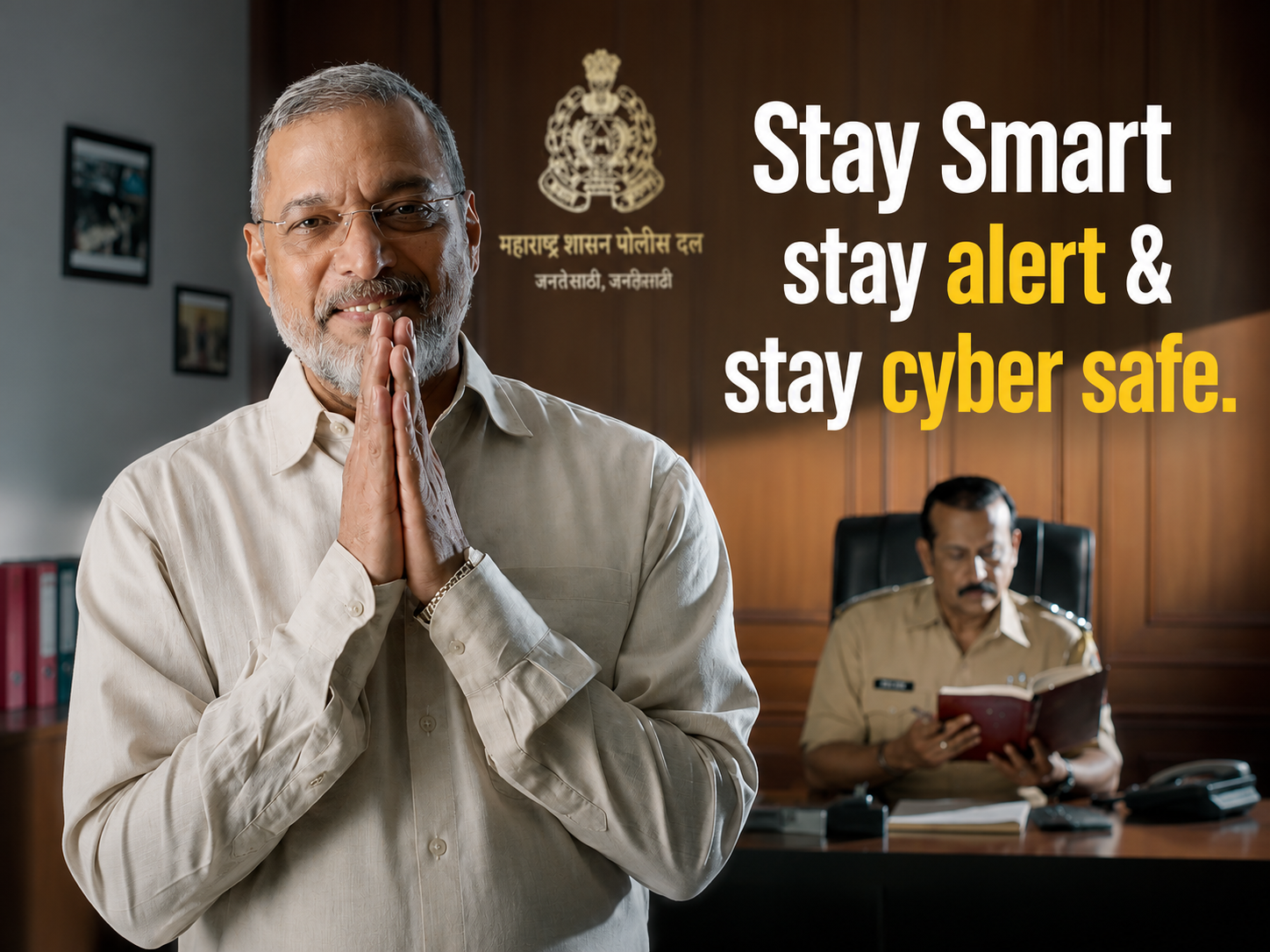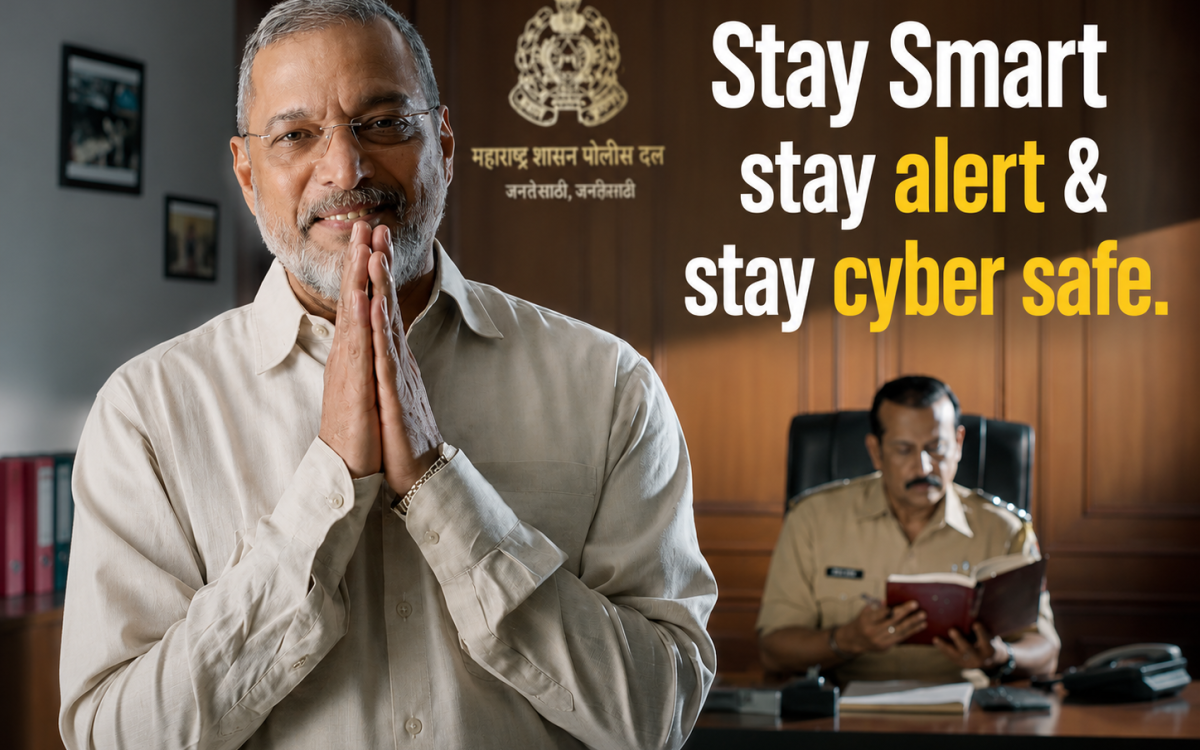
A phone rings in a dark, cluttered room. A man in a beanie leans into the receiver, his accomplice hovering behind him, a single lamp throwing shadows across a desk full of burner phones. He has done this a hundred times. He knows the script: claim to be a cyber cell officer, accuse the person on the other end of a crime, threaten a “digital arrest,” and watch the fear do the rest.
Except this time, the man who picks up is Nana Patekar.
What follows in the next forty seconds is one of the smartest pieces of public service advertising India has produced in years. The clip, pulled from “Scam Files,” a short film released by the Uttar Pradesh Police in January 2026, does something most government PSAs never manage: it makes you want to watch it again. And then send it to your parents. Directed by Raaj Shaandilyaa, the filmmaker behind Dream Girl, and built around a real incident from Kanpur where a citizen flipped a scam call back on the fraudsters, the film turned a dry safety message into a piece of entertainment that spread through the exact channels scammers use to hunt their victims.
Here is why it works, and what every marketer can steal from it.
The Strategy
Digital arrest scams have become one of India’s fastest-growing frauds. Callers impersonate police, CBI, or customs officials, accuse victims of crimes they never committed, and pressure them into transferring money to avoid a fictional arrest. The UP Police had a problem every safety communicator faces: warnings framed as warnings get ignored. People skip lectures. So instead of producing another finger-wagging advisory, the force made a strategic bet on story. They took a real case where the intended victim outsmarted the callers, cast one of Indian cinema’s most unshakeable screen presences as that citizen, and released the film in a format built to be clipped, cropped, and re-shared far beyond their own channels.
- It is anchored in a true story, not a hypothetical. The film draws from an actual Kanpur incident where a man saw through a digital arrest attempt and reversed it on the scammers. That single fact changes the audience’s relationship with the message. This is not “imagine if this happened to you.” It is “this happened, and the ordinary guy won.” Truth gives the campaign a news hook, and the news coverage gave it a second distribution engine that no media budget was paying for.
- The casting is the strategy. Nana Patekar is not a celebrity endorsement bolted onto a script. His entire screen persona, calm, blunt, impossible to intimidate, is the lesson the film wants to teach. The audience does not need to be told “do not panic.” They watch a man who constitutionally cannot be rattled, and the behaviour models itself. The right face made the message land without a single line of preaching.
- It was engineered for the clip economy. The full film runs over five minutes, but its scenes are structured so that a forty-second cut works as a complete story with a setup, a turn, and a punchline. That is not an accident. The version analysed here is a re-upload from a random third-party channel, which is exactly the point: the campaign’s reach came from strangers cutting it down and pushing it across WhatsApp, Shorts, and Reels, the same pipes the scams themselves travel through.
Creative Execution
Strategy tells you what to say. Craft decides whether anyone feels it. “Scam Files” borrows the visual grammar of a crime thriller and then quietly hands the film over to comedy, and that tonal bait-and-switch is where the ad earns its shares. Shaandilyaa opens inside the scammer’s den and lets the audience sit with the machinery of the fraud before the call ever connects. Then the film cuts to the other end of the line, and everything about the frame changes.
- Lighting does the storytelling before dialogue does. The scammers live in near-darkness: hard shadows, a single desk lamp, clutter, two men crowding one phone. Patekar’s home is warm, open, and evenly lit. The contrast is moral, not just visual. And here is the clever part: as the call progresses, the lighting never changes, but the power does. The panic simply migrates from the bright room to the dark one.
- The reversal is structured like a joke. The film follows classic setup-and-payoff rhythm. The setup is the scammers’ confidence, the routine of a con they have run countless times. The turn is Patekar’s refusal to supply the one ingredient the scam needs, which is fear. The payoff is the scammers unravelling, standing up, gesturing at each other, losing the room, while the intended victim sits back and laughs. The final image of the clip is not a warning card. It is Patekar’s grin.
- Comedy carries the compliance message. The core takeaway, that there is no such thing as a digital arrest in Indian law, could have been a title card nobody remembers. Instead it arrives as the punchline of a humiliation. Ridiculing the fraudster is a far stickier teaching device than frightening the viewer, because audiences repeat jokes. Nobody forwards a lecture. Everybody forwards a scene where the bully gets owned.
Key Takeaways
The film is a masterclass for two audiences at once: the citizens it protects and the marketers watching how it was built. Strip away the specifics and you find principles that apply to any brand trying to change behaviour, especially in categories where the default communication style is fear, jargon, or instruction.
- Fear is the product being sold, so teach people not to buy it. Every digital arrest scam runs on one emotion. The film’s genius is showing that the entire con collapses the moment the target stays calm. For communicators, the lesson is identical: identify the single emotional lever your audience’s problem depends on, and build the whole creative around disarming it.
- Entertainment out-teaches instruction every single time. A government body chose a comedy director, a movie star, and a three-act story over a bullet-point advisory, and the result reached audiences no circular ever could. If a police force can trade the lecture for a story, brands have no excuse. The information transfer happens inside the laugh, not instead of it.
- Distribution you do not control is the distribution that matters. The UP Police released the film on their own handles, but the real reach came from re-uploads, cut-downs, and shares they never touched. They made something clippable and let go of it. Campaigns designed to be remixed will always outrun campaigns designed to be protected.